
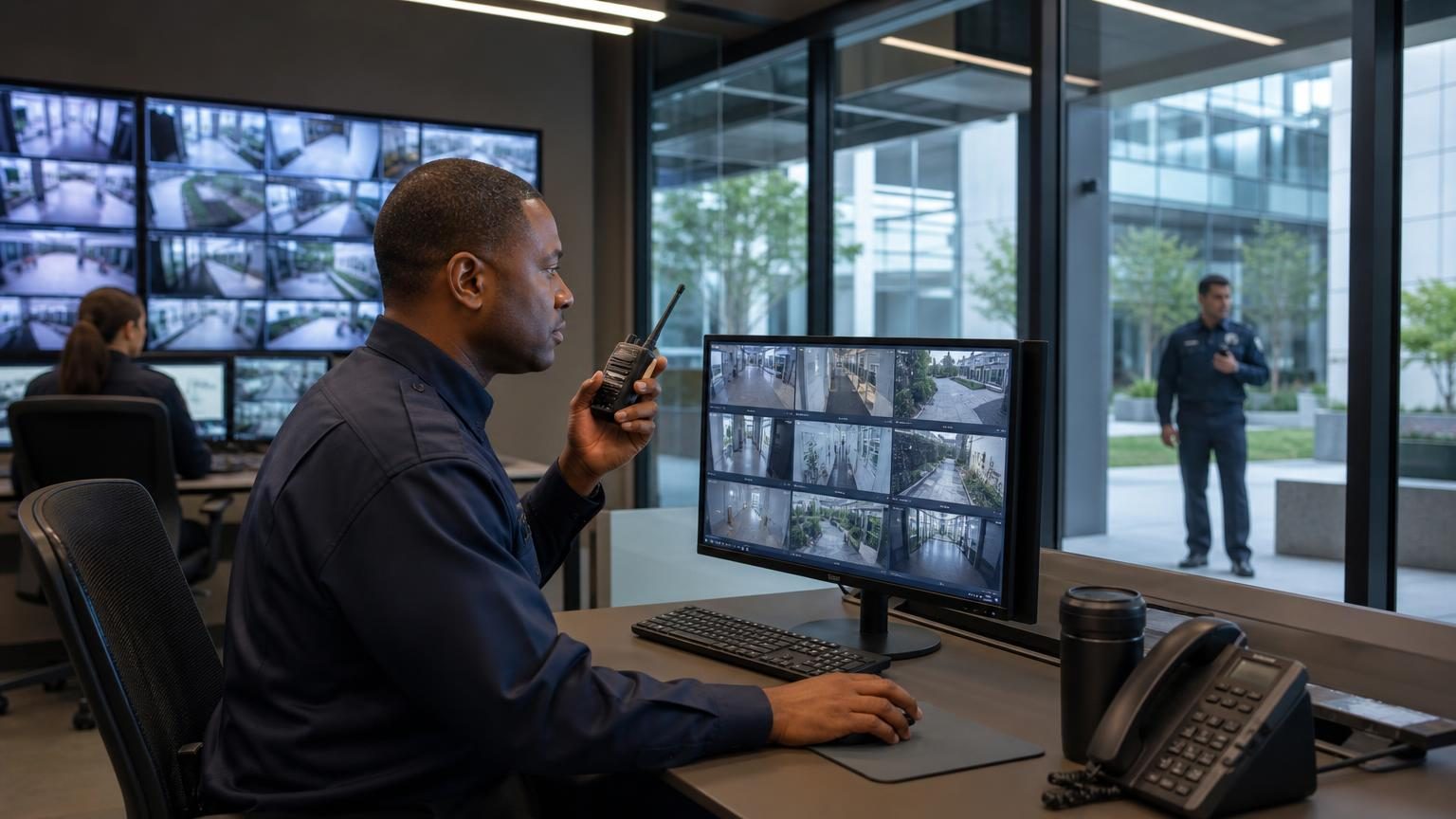
Running security operations across a large facility is no small task. Guards patrol multiple zones, cameras capture footage around the clock, and alarms can trigger at any moment. When these elements work together, your property stays protected. When they don’t, gaps appear that put people and assets at risk.
SecTek combines AI-powered surveillance with trained security professionals to close these operational gaps for enterprise facilities nationwide. This article breaks down the most common coordination failures and shows you how to address each one.
Key Takeaways: Security Coordination Failures in Large Facilities
- Siloed communication channels create blind spots where guards miss critical alerts from surveillance systems altogether.
- Inconsistent response protocols lead to confusion during incidents, slowing reaction times when speed matters most.
- SecTek integrates AI-assisted monitoring with on-site guards to deliver unified, real-time threat detection and response.
- Outdated technology and manual reporting processes prevent security teams from accessing accurate, actionable intelligence.
- Without centralized oversight, multi-building campuses face coverage gaps that criminals can learn and exploit.
Why Guard and Surveillance Coordination Breaks Down in Large Facilities
1. Communication Silos Between Guards and Monitoring Staff
Guards on patrol and operators watching camera feeds often use different communication tools. Radios, phones, and monitoring software may not integrate, leaving critical information trapped in separate channels.
This disconnect means a camera operator spots suspicious activity in one zone while a guard patrols another area without any awareness of the threat. By the time information transfers manually, the window for intervention may have closed.
A unified platform that sends real-time alerts directly to guards on patrol eliminates this delay. AI-assisted surveillance can detect threats and notify the right personnel instantly.
2. Unclear Escalation Procedures During Incidents
When an alarm triggers, who responds first? What information do they need? Who contacts law enforcement? Large facilities often lack documented escalation paths, leaving guards to make judgment calls under pressure.
Inconsistent responses create liability exposure and extend resolution times. One guard might call police immediately; another might attempt to handle the situation alone. Without standardized protocols, similar incidents produce wildly different outcomes.
Clear, written procedures paired with regular training ensure every team member knows their role. Professional monitoring services include pre-defined escalation workflows that remove guesswork from incident response.
3. Predictable Patrol Patterns That Criminals Exploit
Guards following the same route at the same time every shift create predictable patterns. According to research from QR-Patrol, criminals study these routines and time their activities around known patrol schedules.
Large facilities with multiple buildings face this challenge more acutely. A guard can only be in one place at a time, and movement between locations follows logical paths that observant threats can map.
Randomized patrol schedules combined with remote monitoring coverage fill these gaps. When cameras with AI analytics watch areas between guard visits, unpredictability increases without requiring additional personnel.
4. Technology That Doesn’t Talk to Each Other
Access control systems, video management platforms, intrusion alarms, and guard tour software often come from different vendors. Each system generates its own alerts, logs, and reports in isolated formats.
Security managers then face the task of correlating information from multiple dashboards to understand what happened during an incident. This fragmentation wastes time and increases the chance of missing critical details.
Integrated security platforms that combine access control, surveillance, and guard management into a single interface solve this problem. SecTek delivers unified security platforms that give you one source of truth for all security data.
5. Guard Fatigue and Attention Decline During Long Shifts
Human attention naturally decreases over extended periods. Studies show that vigilance drops significantly after the first 30 minutes of monitoring tasks. Guards working 8 or 12-hour shifts cannot maintain peak alertness throughout.
This physiological reality means incidents happening late in a shift face higher odds of delayed detection or missed responses. Facilities relying solely on human observation accept this limitation as unavoidable.
AI surveillance serves as a force multiplier that never loses focus. When trained security officers receive automated alerts about detected threats, they can respond with full attention rather than scanning for problems manually.
6. Poor Documentation and Incident Reporting
Paper-based logs and handwritten reports create gaps in security records. Handwriting varies in legibility, details get omitted under time pressure, and documents can be lost or damaged before reaching management.
When incidents require investigation or legal proceedings, incomplete documentation weakens your position. Insurance claims, liability disputes, and compliance audits all depend on accurate, detailed records.
Digital reporting captured at the moment of observation produces reliable documentation. Mobile applications allow guards to submit reports with photos, timestamps, and location data that create verifiable audit trails.
7. Lack of Centralized Command for Multi-Building Campuses
Facilities spanning multiple structures often distribute security oversight across buildings rather than centralizing operations. Each building may have its own guards, cameras, and procedures with limited coordination between them.
This distributed approach creates coverage gaps at boundaries between areas of responsibility. An incident moving across zones may get handed off poorly or fall through the cracks entirely.
A centralized Security Operations Center that monitors all locations simultaneously provides the oversight commercial buildings and campuses require. SecTek operates SOCs that give multi-site properties unified protection from a single command structure.
How to Build Coordinated Security Operations
Addressing these coordination failures requires both technology upgrades and operational changes. Start by auditing your current communication flows between guards and monitoring staff. Identify where information gets delayed or lost.
Next, document your escalation procedures and train every team member on their responsibilities. Run tabletop exercises that test response times and reveal process gaps before real incidents expose them.
Finally, consider how AI-assisted surveillance can extend your coverage without proportionally increasing headcount. SecTek combines human expertise with advanced technology to deliver integrated security solutions for facilities across industries. As an employee-owned company, our personnel have direct incentive to perform at the highest level for every client we serve.
FAQs about 7 Reasons Security Coordination Fails in Large Facilities
What causes communication breakdowns between guards and surveillance operators?
Separate communication tools and software systems create information silos. Guards using radios and operators using monitoring platforms may have no direct connection, forcing manual information transfer that delays response.
How can AI surveillance improve guard effectiveness?
AI analytics detect threats automatically and alert guards in real time. This allows patrol officers to respond to verified incidents rather than spending energy scanning for problems manually during long shifts.
Why do predictable patrol routes create security vulnerabilities?
Criminals observe patrol schedules and time their activities during known gaps. Randomized routes combined with remote monitoring coverage make it harder for threats to predict when and where guards will appear.
What technology integrations matter most for large facility security?
Access control, video management, intrusion alarms, and guard tour systems should share data through a unified platform. This gives security managers one dashboard for complete situational awareness across the entire property.
How does SecTek address guard fatigue and attention decline?
SecTek pairs AI-powered detection systems with trained security professionals. The technology maintains constant vigilance while human guards bring judgment and physical presence to respond when alerts require action.
What documentation practices support better incident response?
Digital reporting through mobile applications captures details at the moment they occur. Photos, timestamps, and GPS data create verifiable records that support investigations, insurance claims, and compliance requirements.
Tags: security coordination, facility security, AI-assisted surveillance, security operations, commercial security